
How to Get Rid of the Pacifier: Gentle Methods That Work
The Short Answer: The best way to get rid of a pacifier is to choose a method that matches your child’s temperament and your family’s comfort level. Whether you prefer going cold turkey or taking a gradual approach, consistency and positive reinforcement will help your toddler successfully break the pacifier habit.
That beloved binky has been your child’s faithful companion through teething, bedtime battles, and countless car rides. But now you’re noticing it might be time to say goodbye. Maybe your pediatric dentist mentioned concerns about tooth alignment, or your toddler seems attached more often than not.
The good news? With the right timing, a supportive approach, and a little patience, your child can make this transition smoothly.
Understanding Your Child’s Pacifier Attachment
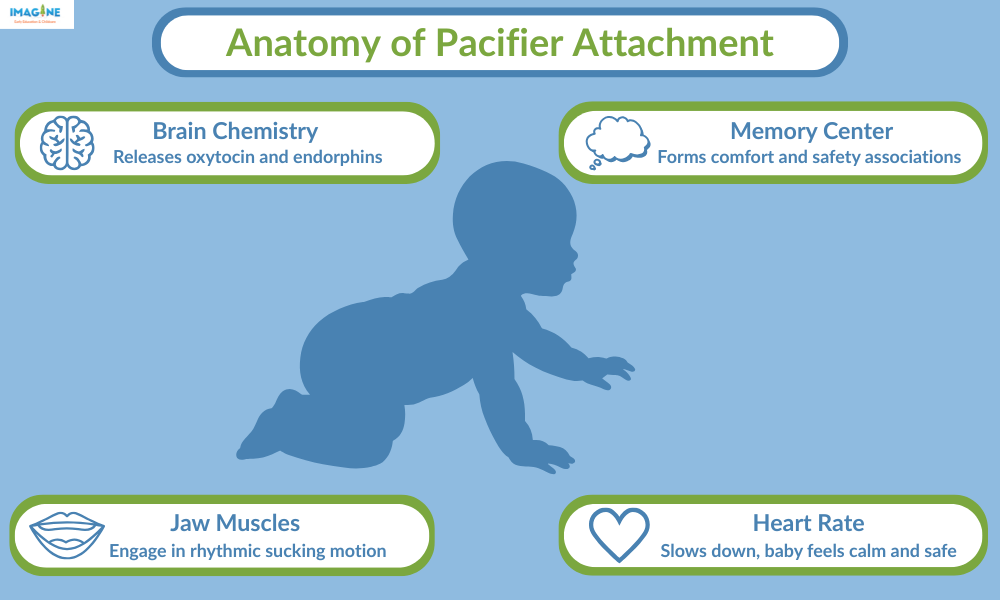
Before diving into weaning strategies, it helps to understand why pacifiers hold such power over little ones. Babies are born with a natural sucking reflex that provides comfort and self-soothing. This sucking motion releases calming hormones, which explains why a fussy baby often settles down immediately when given a pacifier.
For many children, the pacifier becomes more than a soothing tool. It transforms into an emotional attachment and comfort item, similar to a stuffed animal, teddy bear, or soft blanket.
Potential Concerns with Long-Term Pacifier Use
While pacifiers offer benefits during infancy, extended use can create challenges:
- Dental development: The American Academy of Pediatric Dentistry notes that prolonged pacifier usage may affect the child’s mouth structure and lead to dental problems such as open bite or tooth alignment issues.
- Speech development: Older toddlers who constantly have a pacifier may have fewer opportunities to practice sounds and words.
- Ear health: Some research suggests a connection between pacifier use and increased ear infections in children over 6 months.
The American Academy of Pediatrics recommends beginning to limit pacifier use around age 1, with weaning ideally completed between ages 2 and 4.
When to Start Weaning: Signs of Readiness
Timing matters when breaking the binky habit. Choosing the right moment can make the difference between a smooth transition and a struggle.
Best Times to Begin
Sleep experts and pediatric dentistry professionals generally agree that the easiest time to wean is:
- Between 12 and 24 months: Children at this age are developmentally ready but haven’t formed as strong an attachment as older toddlers.
- During calm periods: Avoid starting during major life changes like moving, welcoming a new baby, starting childcare, or during illness.
- When your child shows interest: Some children naturally begin using the pacifier less frequently, signaling readiness.
When to Wait
Consider postponing the weaning process if your family is experiencing stressful situations. A child dealing with a new sibling, a recent move, or other major transitions may need their comfort item more than usual. Consult your child’s pediatrician if you’re unsure about timing.
Every child responds differently, so having several strategies in your toolkit allows you to find what works best for your family.
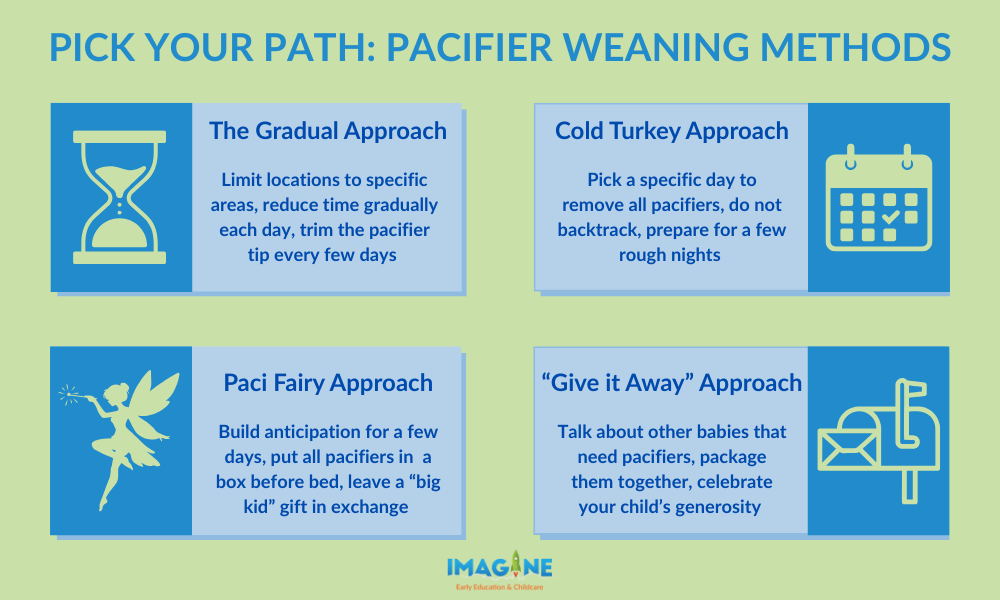
The Gradual Approach
This method works well for children with strong emotional attachments and for parents who prefer avoiding sudden changes.
- Limit locations first: Start by restricting pacifier use to specific areas like the crib or car seat. Explain that pacifiers stay in certain places now.
- Reduce time gradually: Shorten the amount of time your child uses the pacifier each day. Begin by eliminating daytime use, keeping it only for nap time and bedtime.
- Trim the tip: Some parents find success by cutting a small portion off the pacifier tip every few days. The changed sucking sensation often leads children to lose interest naturally.
Going Cold Turkey
Some families find that a clean break works better than a drawn-out process. This approach requires commitment but often results in faster adjustment.
- Pick a specific day: Choose a calm period and commit to removing all pacifiers from your home.
- Stay consistent: Once you’ve made the decision, don’t backtrack. Going back and forth confuses children and prolongs the process.
- Prepare for a few tough nights: Expect some resistance, especially at bedtime. Most children adjust within 3 to 5 days.
The Paci Fairy or Binky Fairy Method
This creative approach works wonderfully for imaginative children around ages 2 and up, similar to how the tooth fairy concept captures children’s attention.
- Build anticipation: Spend a few days talking about the pacifier fairy who collects pacifiers from big kids and brings them to babies who need them.
- Create a ceremony: Have your child place their pacifiers in a special bag or box before bed.
- Leave a reward: The binky fairy leaves behind a new toy or special big kid gift in exchange for the pacifiers.
The “Give It Away” Method
Older toddlers who understand helping others often respond well to this approach. Tell your child that babies need pacifiers, and since they’re now a big kid, they can help by donating theirs. Package the pacifiers together and “mail” them somewhere special, then celebrate your child’s generosity.
Managing the Transition: Tips for Success
Whichever method you choose, these strategies make the process easier.
Prepare for Sleep Challenges
Sleep often presents the biggest hurdle. Your child associates the pacifier with falling asleep, so breaking this connection takes time and patience.
- Strengthen bedtime routines: Add extra stories, songs, or cuddle time to help your child feel secure without the pacifier.
- Introduce a replacement comfort item: A new stuffed animal or soft blanket can provide comfort during the transition.
- Stay calm during nighttime wake-ups: Offer comfort through words and touch rather than giving in to requests for the pacifier.
Use Positive Reinforcement
Celebrate your child’s progress rather than focusing on setbacks.
- Offer specific praise: Instead of general comments, say things like “You fell asleep so well without your paci!”
- Create a reward chart: Visual progress trackers motivate many children.
- Avoid shaming: Never call your child a baby for wanting the pacifier or make them feel bad about the attachment.
What to Expect
Most children adjust within one to two weeks. The first few days prove most challenging, especially around nap time and bedtime. You may notice increased thumb-sucking or requests for extra comfort. These responses are normal and usually pass quickly.
If your child struggles significantly after two weeks, reach out to your child’s pediatrician or a pediatric dentist for guidance.
Imagine Early Education & Childcare: Supporting Your Child’s Development Journey
At Imagine Early Education and Childcare, we understand that milestones like pacifier weaning represent just one part of your child’s development. Our educators work alongside families to support children through transitions while nurturing their cognitive, physical, emotional, and social growth.
Our teachers maintain consistent routines and provide the responsiveness children need during adjustment periods. Whether your little one is working through pacifier weaning at home or facing other developmental milestones, our staff partners with you to maintain that continuity between home and school.
Ready to learn more about how Imagine Early Education & Childcare supports your child’s growth? Schedule a tour today to experience our nurturing environment firsthand and see how we help children thrive through every stage of development.

