
How to Help Your Four-Year-Old Learn to Share
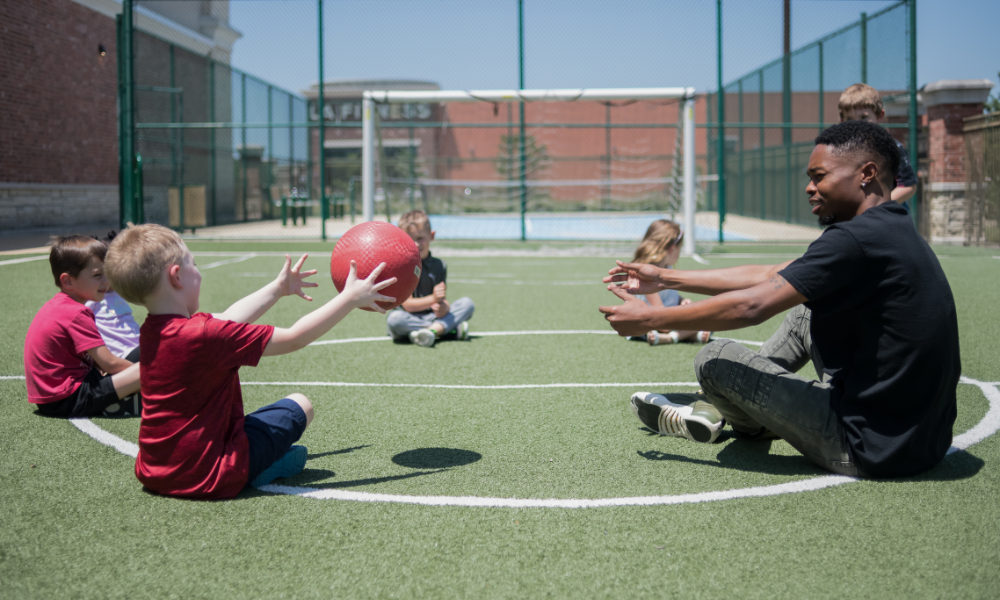
The Short Answer: Sharing is a complex skill that four-year-olds are only beginning to develop. With patience, positive reinforcement, and age-appropriate strategies, you can help your young child build the social and emotional tools they need to share willingly.
Your four-year-old clutches a stuffed animal to their chest while their little sister reaches for it, and suddenly the living room turns into a courtroom. Sound familiar? At this age, children are still learning the concept of sharing, and it can feel like an uphill battle. The good news is that sharing behavior develops naturally over time with the right support. This guide walks you through why sharing is so difficult at age four, practical tips for teaching children to share, and how to handle those inevitable meltdowns.
Why Four-Year-Olds Have a Hard Time Sharing
Understanding what is happening in your child’s brain makes it easier to respond with empathy instead of frustration.
Where They Are Developmentally
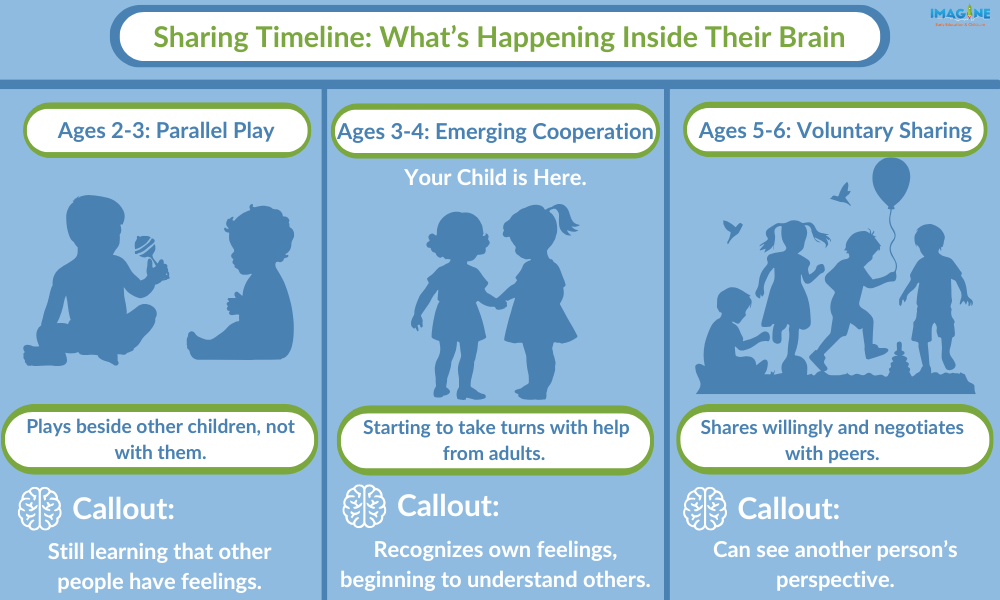
Most four-year-olds are in the middle of major emotional development. They are moving beyond parallel play, where children play side by side without interaction, and into cooperative play. A developmental psychologist would tell you that the ability to see another person’s perspective is still forming at this age. Your child is not being selfish on purpose. Their brain simply has not caught up to the social expectations we place on them.
Developmental milestones at age four include recognizing their own feelings, understanding that others have feelings too, and beginning to negotiate during social interactions. These are building blocks for sharing, but they take time to solidify.
Ownership and Emotional Attachment
To a four-year-old, a prized possession is not just a toy. It is part of their identity. When you ask them to hand over their favorite truck or glue stick to a younger child, it can feel like you are asking them to give away a piece of themselves. Recognizing that attachment helps you approach sharing lessons with compassion instead of commands.
Proven Strategies to Teach Your Four-Year-Old to Share
There is no single trick that works overnight. Here are practical methods that go a long way toward building lasting life skills.
- Use a Timer to Take Turns: A kitchen timer is one of the simplest tools you can use. Set it for two or three minutes and let one child play with the toy. When the timer goes off, it is the next child’s turn. The timer becomes the authority figure, not you. This removes the emotional charge and teaches the concept of a long turn versus a short turn.
- Name and Validate Feelings: When your child refuses to share, get down to their eye level and acknowledge what they are feeling. Try saying, “I can see you are having a hard time letting go of that toy. It is okay to feel upset.” Naming emotions is a building block of emotional development. Once a child feels heard, they are far more likely to cooperate.
- Practice With Low-Stakes Items: Start with things that do not carry heavy emotional weight. Sharing a snack, splitting ice cream, or passing a glue stick during an art project are all low-pressure ways to practice. Save the special toys for later, once the concept of sharing feels more natural.
- Model Sharing Behavior Yourself: Children learn by watching family members. Narrate your own sharing throughout the day. Say things like, “I am sharing my blanket with Dad,” or “Would you like some of my apple?” When your child sees sharing modeled positively, they absorb the sharing lesson without a lecture.
- Designate Special Toys: It is okay for your child to have a few of their own toys that they do not have to share. Before a playdate, help them put special toys in a safe place and choose which toys they are comfortable sharing. Knowing they have a safe place for their most loved items makes the rest of sharing feel less threatening.
Handling Sharing Conflicts in the Moment
Even with the best preparation, conflicts will happen. How you respond in those heated moments matters more than any planned sharing lesson.
Stay Calm and Coach
When two children fight over a toy, resist the urge to solve it immediately. Take a few deep breaths yourself, then coach them through it. Ask questions like, “How do you think your friend feels right now?” or “What could we do so both of you get a turn?” This teaches problem-solving rather than obedience.
Avoid Forced Sharing
Demanding that a child hand over a toy mid-play often backfires. It breeds resentment and does not teach the skill. Instead, let the child finish their turn first. You might say, “When you are done building your tower, it will be your sibling’s turn next time.” This respects their activity while setting an expectation.
Use Praise as Positive Reinforcement
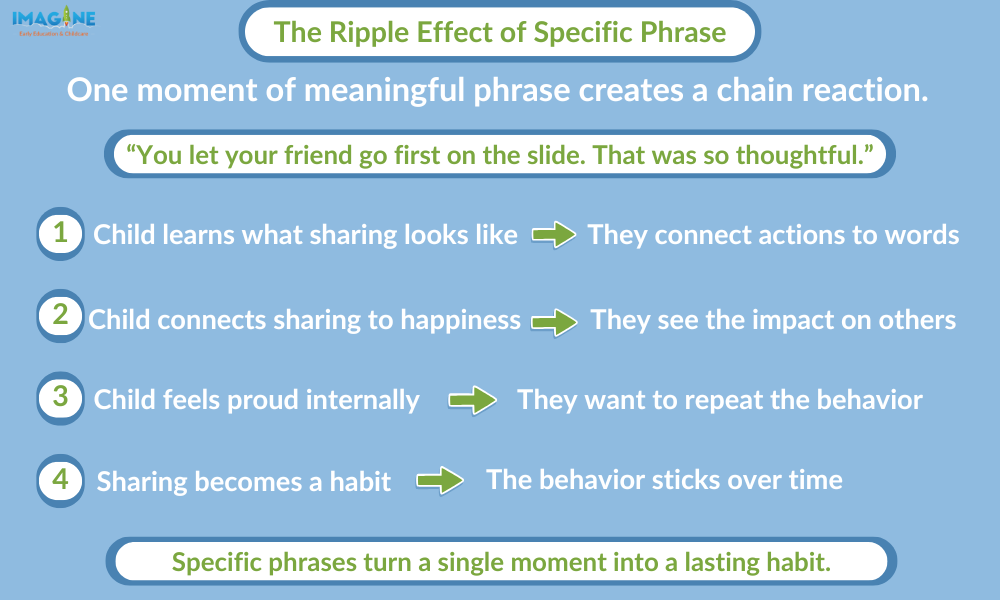
When your child does share, acknowledge it right away. Be specific. Instead of “good job,” try “That was really kind of you to let your little sister use the red crayon. Did you see how happy that made her?” Specific praise reinforces the behavior you want to see and connects sharing to positive social interactions.
Building a Sharing-Friendly Daily Rhythm at Home
Sharing does not have to be a standalone lesson. You can weave it into your daily rhythm so it becomes second nature.
Cooperative Activities
Choose activities that require teamwork. Baking together, building a block tower as a team, or working on a puzzle all create natural sharing moments. Teaching kids through cooperative activities shows that working together often produces something better than working alone.
Sibling Strategies
If you have an older child or older sibling alongside a toddler, sharing dynamics get more complicated. Give the older child leadership roles, like choosing which game the family plays. For the youngest child, teach them to ask before grabbing by modeling the words, “Can I have a turn, please?”
Storytime and Role Play
Books about sharing are a wonderful teaching tool. After reading, ask your child how the characters felt and what they would do next time. Role-playing with a stuffed animal or dolls gives children a chance to practice in a safe setting. A little boy might share pretend ice cream with his teddy bear and discover that it actually feels good.
Imagine Early Education and Childcare: Growing Social Skills Every Day
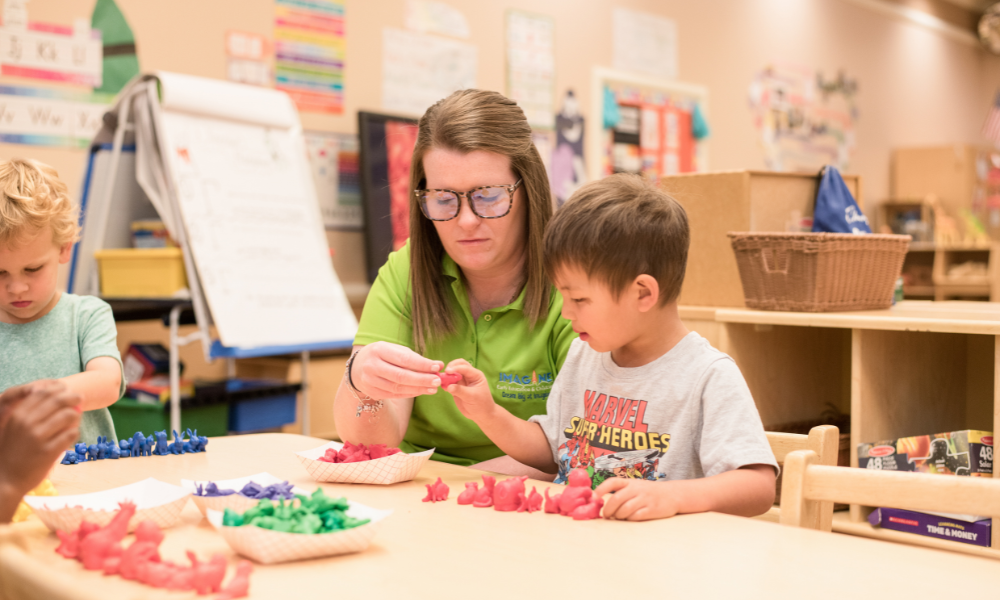
At Imagine Early Education and Childcare, we understand that learning to share is one of many social skills children develop during early childhood. Our educators guide children through real-world social interactions, helping them build the emotional vocabulary and confidence to navigate friendships. From sharing art supplies during STEAM activities to taking turns in group games, every part of our schedule reinforces these skills in age-appropriate ways.
We partner with families to support growth at home and school. Through our Kindertales app, parents receive updates on developmental milestones and suggestions for extending learning beyond the classroom.
Ready to see how we support your child’s social and emotional growth? Schedule a tour at your nearest Imagine Early Education and Childcare center to experience our learning environment firsthand.

Leave a Reply
Want to join the discussion?Feel free to contribute!