
Benefits of Daycare: How It Supports Your Child’s Growth and Learning

Daycare supports your child’s social, emotional, and cognitive development through structured learning, peer interaction, and consistent routines. Quality child care helps young children build school readiness and develop social skills that benefit them for life.
Choosing daycare is a big decision for any family. Parents often wonder how time spent in a child care center will shape their child’s early years. Research shows that high quality early care can have lasting positive effects on children’s development, from language growth to confidence in social settings.
How Does Daycare Support Children’s Development?
Daycare offers young children daily opportunities to grow in ways that are hard to replicate at home. A quality child care setting blends play, structured lessons, and peer interaction to support the whole child.
Social-Emotional Development
Time around peers helps children build social skills like sharing, taking turns, and working through small conflicts. Social-emotional development happens during everyday moments at a childcare center, such as group circle time and cooperative play. Children also learn to name their own feelings and respond to others with empathy. These early lessons shape how they form friendships throughout school and life.
Cognitive Growth and Early Learning
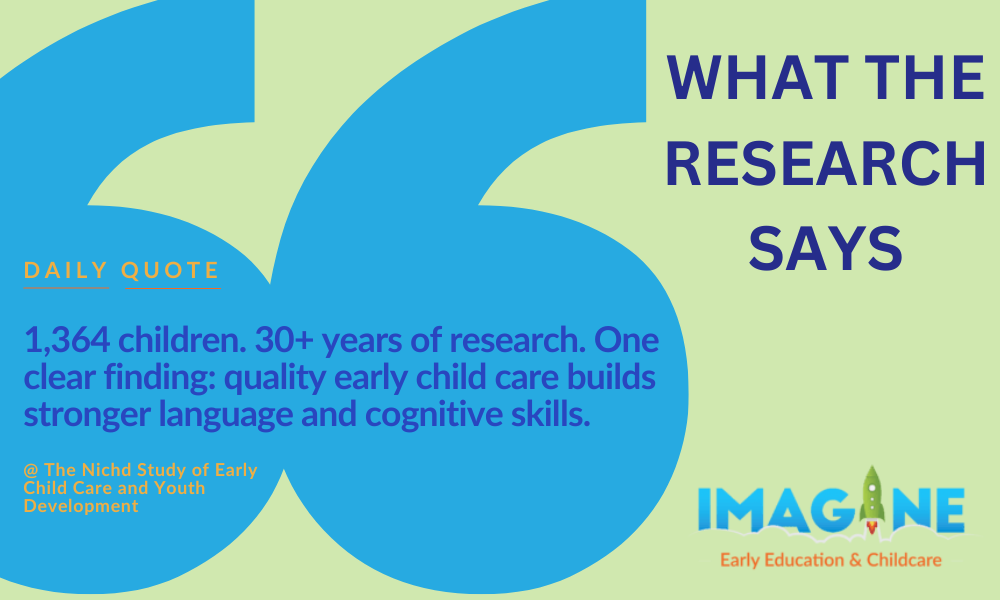
Early learning activities such as storytelling, counting games, and hands-on science build the foundation for academic success. Research shows that children in high quality center-based child care often score higher on language and cognitive assessments than peers in lower quality care.
Physical and Language Skills
Daily routines at a child care center include outdoor play, art, and music. These activities support motor skills and creative expression. Conversations with teachers and other young children also strengthen vocabulary, listening abilities, and early communication. Even simple back-and-forth talk at snack time builds a child’s language base.
How Does Daycare Prepare Children for School?
School readiness is one of the most studied positive effects of quality child care. Children who attend a structured child care program often arrive at kindergarten with stronger pre-literacy skills, better focus, and the ability to follow classroom routines.
Building Independence Through Routines
Consistent daily schedules help children learn what to expect. They practice life skills like washing hands, putting on coats, and tidying up after activities. These small habits build the confidence needed for kindergarten and beyond. Independence learned at daycare often translates to smoother mornings at home.
Early Academic Foundations
A strong child care program introduces letters, numbers, shapes, and patterns through hands-on activities. Children count objects, recognize their names in print, and ask questions about the world around them. This early exposure makes academic content feel familiar when formal schooling begins.
Communication With Families
Many childcare centers share progress updates with parents through apps, newsletters, or in-person conferences. This partnership between family members and educators helps reinforce learning at home and at the child care center. Families stay informed about milestones, behavior, and daily activities.
What Should Parents Look for in a Quality Child Care Provider?
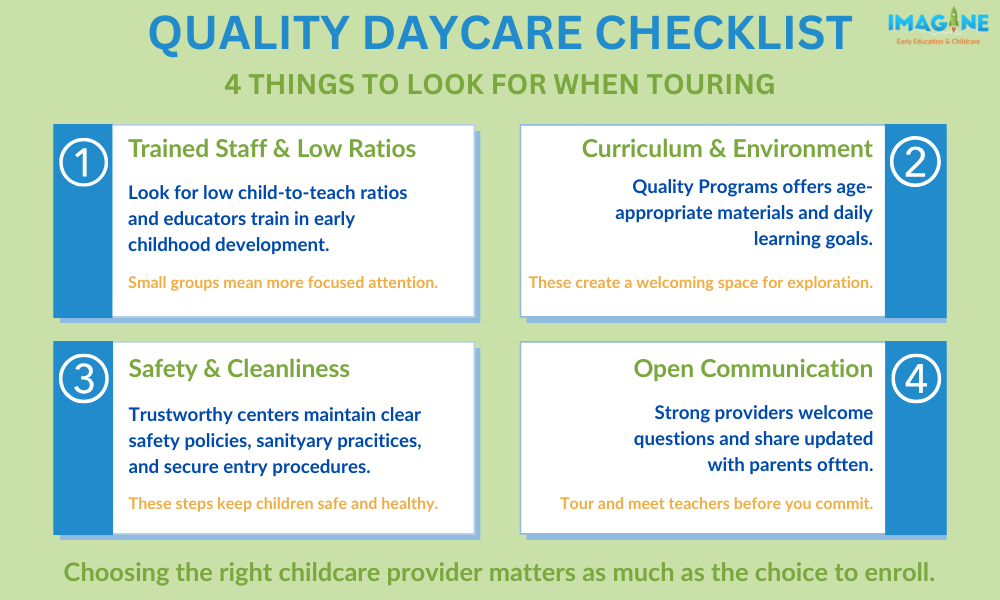
Choosing the right child care provider matters as much as the choice to enroll. The best programs balance learning with warmth, safety, and individual attention. Here is what to evaluate when touring a child care center.
- Trained staff and low ratios: Look for providers with low child-to-teacher ratios and educators trained in early childhood development. Small group sizes give every child more focused attention.
- Curriculum and environment: A quality child care program offers age-appropriate materials, daily learning goals, and a welcoming space for exploration. Ask how the provider supports children with special needs and tracks developmental milestones.
- Safety and cleanliness: A trustworthy childcare center maintains clear safety policies, sanitary practices, and secure entry procedures. Look for posted licensing information and emergency plans.
- Open communication: Strong providers welcome questions and share updates often. Tour the space, meet teachers, and observe how children interact with their environment before you commit.
A short visit can tell you a lot. Watch how staff speak to children, how the rooms are organized, and whether kids appear engaged and content.
How Can Families Manage Child Care Costs?
Child care costs can be a real concern for many households. Several types of financial assistance exist to help eligible families afford quality early care.
Child Care Subsidy Programs
The Child Care and Development Block Grant funds a childcare subsidy program in every state. A child care subsidy can lower the monthly cost for families who meet income requirements. Subsidy payment amounts vary based on family size, adjusted gross income, and the type of provider you choose, including center-based child care, in-home care, or a relative provider.
Eligibility Requirements
Eligibility requirements differ by state but often consider these factors:
- Gross income: Most programs compare household monthly income to the state’s median income for cash assistance and child care assistance.
- Family size: Larger families may qualify at higher income levels.
- Work or school status: Many states ask that parents work full time, attend school, or actively seek employment.
- Child’s age: Most child care assistance covers children up to age 13.
Applying for Help
Contact your state’s department of human services to learn about cash assistance and child care assistance options. Some programs have a waiting list, so apply early. Many child care services also offer fee assistance and sliding-scale rates directly to families. At Imagine Early Education & Childcare, we only accept state assistance in Texas locations.
Imagine Early Education & Childcare: Your Partner in Early Learning

At Imagine Early Education and Childcare, we serve families with children from six weeks through age twelve. Our Curriculum blends teacher-led instruction with play-based learning, creating a balanced experience that supports each child’s growth.
If you want to see our learning environment in person, schedule a tour at your nearest Imagine location. Our staff will answer your questions and show you how we build a strong foundation for your child’s love of learning. Visit our website to find a center near you and start your child’s journey today.
What age should a child start daycare?
Most children start daycare between six weeks and three years old, based on family needs. Many high quality childcare centers accept infants as young as six weeks. Starting earlier helps children adapt to routines and peer interaction, while later starts can work for families with flexible care at home.
How does daycare affect a child’s social skills?
Daycare gives young children daily practice with sharing, listening, and cooperating. Children in center-based child care often develop stronger social skills and emotional awareness than peers without similar experiences. Group play also teaches kids how to make friends and work through small conflicts.
Is daycare better than in-home care?
Both options offer real benefits. Center-based child care provides structured learning, peer interaction, and trained staff. In-home care from a relative provider gives one-on-one attention and a familiar setting. The best choice depends on your child’s personality, your family’s schedule, and your budget.
What is a child care subsidy?
A child care subsidy is financial assistance from a state or federal childcare subsidy program that lowers child care costs for eligible families. Subsidy payment amounts depend on family size, monthly income, and the child care provider you choose. Apply through your state’s human services office to review income requirements.
How do I know if a daycare is high quality?
A high quality child care program has trained staff, low child-to-teacher ratios, a clear curriculum, and strong safety practices. Look for state licensing, accreditation, and positive parent reviews. Visit the center in person and ask how they support social-emotional development and school readiness.

