
2-Year-Old Separation Anxiety: What’s Normal and How to Help
The Short Answer: Separation anxiety in 2-year-olds is a normal part of emotional development that typically peaks between 18 months and 3 years. This phase signals healthy attachment and can be managed with consistent routines, patience, and age-appropriate coping strategies.
Watching your toddler cling to your leg as you try to leave for work or hearing them cry at preschool drop-off can tug at any parent’s heart. This common developmental milestone affects many families with young children. Understanding what’s happening can help you support your child through this phase with confidence. Separation anxiety at this age reflects your child’s growing awareness that you exist even when out of sight. While the tears and protests can be exhausting, they’re actually signs of healthy attachment and cognitive development.
Understanding Separation Anxiety in 2-Year-Olds
Separation anxiety occurs when young children become distressed upon separating from their primary caregiver. At age two, your toddler has developed strong attachments but still lacks the cognitive skills to understand that separations are temporary. This anxiety differs from normal goodbye fussiness. A child with normal separation anxiety shows intense worry or distress that goes beyond brief upset.
The Developmental Context
Object permanence develops during the first two years of life. By age two, toddlers understand that people and things continue to exist even when they can’t see them. This awareness actually triggers anxiety because your child now realizes you’re somewhere else without them. The preschool years represent a time of rapid emotional development. Your toddler is learning to navigate complex feelings while building independence.
Normal Anxiety vs. Separation Anxiety Disorder
Most toddler separation anxiety is developmentally appropriate and temporary. However, separation anxiety disorder is a more persistent condition. Signs that your child’s anxiety might need professional attention include:
- Symptoms lasting beyond age 4: Persistent distress that continues as your child grows may indicate an anxiety disorder.
- Panic attacks or extreme physical symptoms: Severe reactions like vomiting, excessive sweating, or hyperventilation during separations.
- Interference with normal functioning: When anxiety prevents your child from attending school or developing relationships with other caregivers.
If you’re concerned your child’s anxiety exceeds normal limits, consult your child’s healthcare provider or a mental health professional specializing in early childhood.
Recognizing Signs and Symptoms
Understanding how separation anxiety manifests helps you respond appropriately and track whether your child’s reactions are improving.
Behavioral and Physical Signs
Toddlers express their anxiety through behaviors rather than words. Your 2-year-old might cling to you constantly, refusing to let you out of sight even at home. During actual separations, you might see intense protests, including crying, screaming, or tantrums that persist after you’ve left.
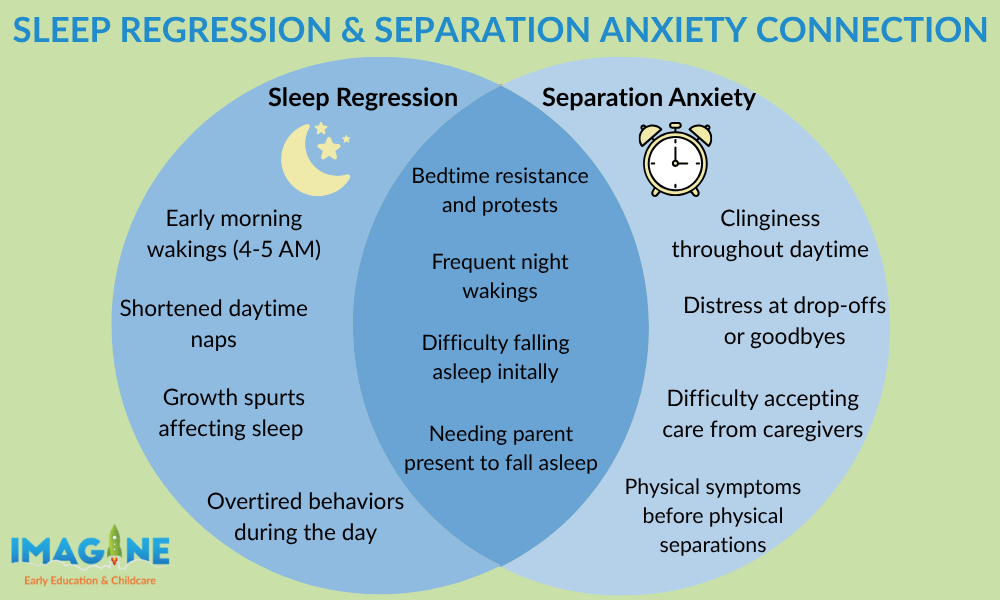
Young children often experience anxiety physically. Your toddler might complain of stomach aches or headaches before separation. Many 2-year-olds with separation anxiety experience sleep regression, resisting bedtime, waking frequently during nighttime sleep, or having difficulty with their daytime nap.
Impact on Daily Activities
Separation anxiety can affect various aspects of your family’s routine. Drop-offs at a new school or with a new caregiver often trigger the most visible reactions. Your toddler might also struggle when a family member visits or when meeting a new person. Some children become hesitant about new experiences generally, making outings or routine appointments more challenging.
Common Triggers and Causes
Several factors contribute to separation anxiety in toddlers. Understanding these causes helps you respond with empathy.
Developmental Changes
The period between 18 months and 3 years brings significant cognitive and emotional growth. Your child is developing a stronger sense of self while becoming more aware of their dependence on you. Many parents notice their child’s separation anxiety intensifies during language development spurts or when motor skills are advancing rapidly. The 2-year-old sleep regression and the month sleep regression phases can also amplify anxiety symptoms.
Life Transitions and Temperament
Changes in routine or environment commonly trigger or worsen toddler separation anxiety. Starting at a new school or childcare program represents a major transition. Even positive changes like a new sibling or moving can unsettle your toddler’s sense of security. The introduction of a new caregiver requires adjustment time.
Some kids are naturally more sensitive or are slow to warm up. These children may experience more intense separation anxiety or take longer to adjust to separations. Previous separation experiences also matter. An older child who has experienced long or stressful separations may develop heightened anxiety about future separations.
Practical Strategies to Support Your Toddler
You can help your child develop coping skills and confidence around separations through intentional strategies.
Create Predictable Routines
A consistent routine provides security for anxious toddlers. Establish a predictable morning routine that includes the same steps in the same order each day. Your bedtime routine is equally important. A consistent bedtime routine that includes calming activities like reading or singing helps prevent bedtime resistance and supports better nighttime sleep.
Practice Short Separations
Start with very brief separations and gradually increase the duration as your child builds confidence. Leave your toddler with a trusted family member for just 15-20 minutes initially. Make these short separations routine rather than special events. Regular practice helps your child learn that you always come back.
Goodbye Rituals and Comfort Objects
Develop a simple, consistent goodbye ritual. This might include a special hug, a phrase you always say, or a wave at the window. Keep it brief and upbeat. Lingering or appearing anxious yourself can increase your child’s anxiety.
A comfort object like a favorite stuffed animal, blanket, or photo of your family can help your toddler feel connected to you during separations. Avoid sneaking away to prevent tears. Always say goodbye, even if it triggers tears, so your child learns to trust you.
Validate Feelings and Prepare for Transitions
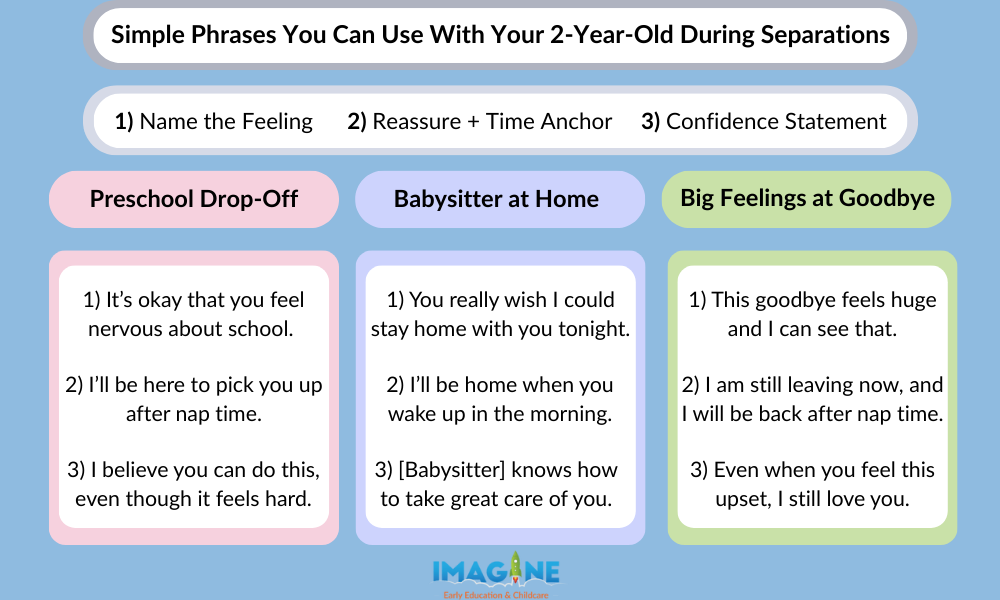
Acknowledge your child’s feelings without reinforcing the anxiety. Try validating their emotion while providing reassurance, such as recognizing their sadness about the separation, affirming that feeling sad is acceptable, and reminding them you’ll return at a specific, familiar time, like after naptime.
Give your toddler advance notice before transitions. Use timers or visual schedules to help them understand when changes will happen. Read books about separation during calm moments to normalize the experience. Help your child develop trust with other adults by arranging opportunities for your toddler to spend time with their caregiver while you’re still present.
Imagine Early Education & Childcare: Supporting Your Toddler’s Emotional Development
At Imagine Early Education and Childcare, we understand that separation anxiety is a normal but challenging part of early childhood. Our experienced educators are trained to support both children and families through this developmental phase with patience and proven strategies.
Our programs for young children incorporate elements that specifically address emotional development and build security. We maintain consistent daily routines that help toddlers feel safe and know what to expect. Our curriculum focuses on the whole child, including social-emotional growth alongside cognitive and physical development. Our classrooms emphasize predictable schedules that reduce anxiety about transitions.
We partner closely with families during separation challenges. Our team communicates regularly through the Kindertales app, sharing updates about your child’s day and any concerns. We work with parents to develop consistent strategies between home and school, which helps children feel more secure across environments. If your 2-year-old is struggling with separation anxiety, we’re here to support your family. Schedule a tour to see how our nurturing environment helps young children build the confidence they need to thrive.

