
Healthy Meals for Kids They’ll Actually Eat
The Short Answer: Kids are more likely to eat healthy food when it looks familiar, comes in manageable portions, and gives them some sense of control. A handful of practical strategies and kid-friendly recipes can change the dinner table from a standoff into a success.
Getting nutritious meals on the plate is one thing. Getting kids to actually eat them is another. Picky eaters, food jags, and after-school snack battles are part of daily life for most parents. The good news is that healthy eating for kids does not require fancy cooking or unusual ingredients. It requires a plan.
This guide covers why kids resist new foods, how to build a balanced meal they will enjoy, which recipes tend to work best, and how to make meal prep manageable for busy families.
Why Kids Resist New Foods (and What to Do About It)
Children go through phases of food refusal for completely normal developmental reasons. A fear of new food, called food neophobia, peaks between ages 2 and 6. This is not stubbornness. It is a natural stage of development, and understanding it takes a lot of the frustration out of mealtimes.
What actually helps with a picky eater:
- Repeated exposure over time: Research from pediatric nutrition programs suggests kids may need to see or taste a new food 8 to 15 times before accepting it. One refusal is not a final verdict.
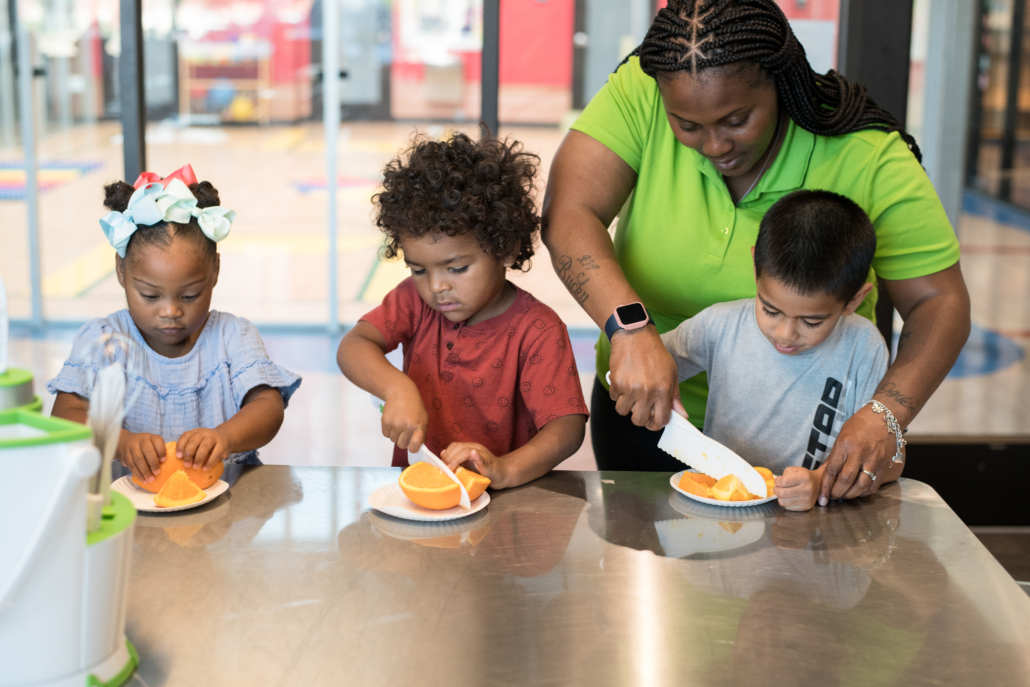
- Involve kids in the process: Children who help wash, stir, or put together a meal are more likely to eat it. Even a toddler in a high chair can rinse fruit or tear lettuce leaves.
- Skip the pressure: Forcing a child to finish their plate tends to make the problem worse. Offering a small serving and praising any attempt builds better habits over time.
- Pair new foods with favorites: Serve something unfamiliar alongside a food your child already accepts. This approach lowers resistance without making mealtime a negotiation.
For kids stuck on a short rotation, swapping similar options works better than eliminating favorites. If chicken nuggets are a staple, try baked homemade nuggets made with whole grain breadcrumbs. The texture stays familiar while the nutritional value improves.
What a Balanced Meal for Kids Actually Looks Like
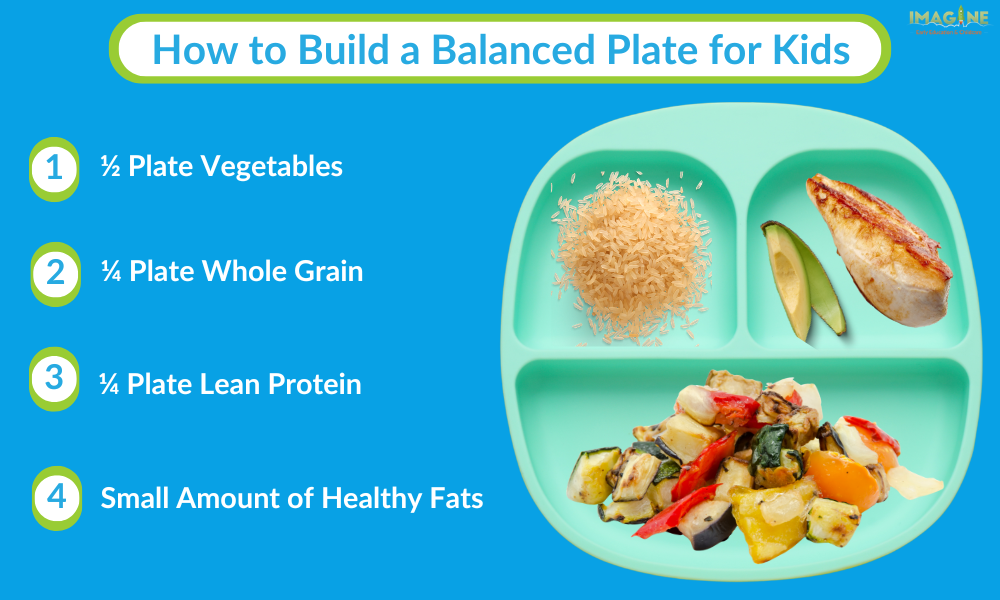
A balanced meal does not need to be complicated. The goal is variety across food groups on one plate at one sitting.
Simple plate formula for a healthy meal:
- Half the plate: fruits and vegetables in any form, fresh, frozen, or roasted
- One quarter: lean protein such as chicken, eggs, beans, or cheese
- One quarter: whole grains like brown rice, whole wheat pasta, or oats
- A small amount of healthy fats from avocado, nut butter, or olive oil
This formula adapts to breakfast, lunch, and dinner with very little effort.
Whole Grains
Whole grains are one of the easiest swaps to make. Swap white rice for brown rice, or try cauliflower rice mixed in. Use whole wheat tortillas for wraps and quesadillas. Oatmeal at breakfast replaces sugary cereal without much resistance from most kids.
Healthy Fats
Many parents reach for low fat dairy products out of habit, but children need healthy fats for brain development. Full-fat yogurt, eggs, avocado, and nut butters are good sources that also help keep kids fuller between meals.
Fruits and Vegetables Kids Tend to Accept
- Sweet potato, roasted or mashed, has a mild sweetness most children enjoy
- Frozen peas stirred into pasta or rice are nearly invisible on the plate
- Carrots with hummus make a snack that counts as a balanced option
- Smoothies can blend spinach, frozen fruit, and yogurt into one cup
Kid-Friendly Recipes Worth Adding to Your Rotation
These recipes hit nutritional targets while staying practical for weeknight cooking.
Breakfast
- Egg muffins: Whisk eggs with chopped vegetables and shredded cheese. Pour into a greased muffin tin and bake at 350°F for 15 minutes. These work well for meal prep and reheat quickly on school mornings.
- Oat pancakes: Blend oats into flour and mix with eggs, a ripe banana, and a splash of milk. No added sugar needed. Serve with fresh fruit on the side.
Lunch
- Whole grain wraps: Fill with turkey, cheese, shredded carrots, and spinach. Let kids assemble their own wrap. When children build their own plate, they are more likely to eat it.
- Slow cooker chicken soup: Add chicken, broth, diced vegetables, and seasonings in the morning. By lunch or dinner, a warm family meal is ready. This is one of the most reliable recipes for feeding the whole family on a busy weekday.
Dinner
- Chicken meatballs: Mix ground chicken with oats, one egg, garlic, and a splash of soy sauce. Shape into small balls and bake at 400°F for 18 minutes. Serve with pasta and tomato sauce. These freeze well for future meal prep nights.
- Sweet potato and black bean tacos: Roast cubed sweet potato with cumin and a pinch of chili powder. Fill small tortillas and top with cheese and sour cream. This vegetarian option works for the whole family and comes together in under 30 minutes.
- Sheet pan chicken and vegetables: Toss chicken pieces and your child’s accepted vegetables in olive oil and salt. Roast together at 425°F for 25 minutes. Minimal prep, minimal cleanup, and a balanced meal on one pan.
Snacks That Count as Nutrition
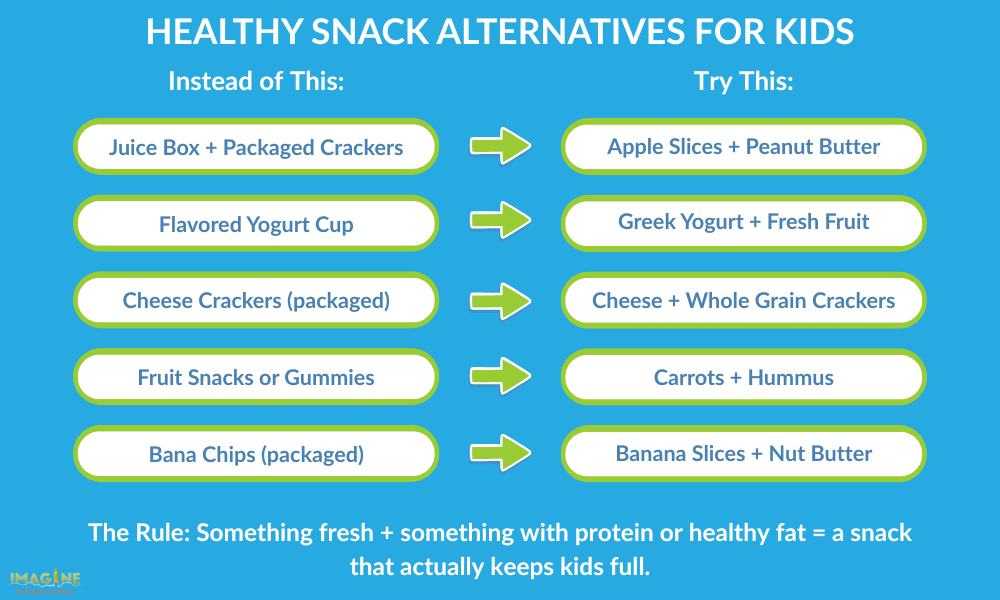
Snacks are where nutrition often slips. Juice boxes and packaged snacks add sugar without much to show for it. Better snack swaps that kids tend to accept:
- Apple slices with almond or peanut butter
- Cheese and whole grain crackers
- Greek yogurt with fruit stirred in
- Veggies and hummus
Practical Meal Prep and Child Nutrition Tips
A little prep at the start of the week makes healthy eating easier on every other day. The goal is not cooking full meals in advance. Prepping components gives families flexibility throughout the week.
What to prep ahead each week:
- Cook a large batch of whole grains like brown rice or quinoa
- Roast a sheet pan of vegetables: sweet potato, broccoli, zucchini
- Hard boil a dozen eggs for quick protein at any meal
- Make a slow cooker soup or stew to portion out across several days
With these ready, grain bowls, wraps, scrambled eggs, and soups all come together in a few minutes. Having healthy options prepared also reduces the temptation to reach for fast food or packaged snacks on busy nights.
Involve Kids in Meal Planning
Letting kids pick one dinner per week from a short list of healthy options gives them a sense of ownership. They are more likely to eat a meal they helped choose. Keep the options realistic: two or three kid-friendly meals you are willing to cook, all of them nutritious.
A Note on Child Nutrition Programs
For families managing tighter budgets, school meals can be a reliable source of nutritious food for kids. The National School Lunch Program provides balanced meals at reduced or no cost to qualifying children. Child nutrition programs like this help fill gaps when cooking at home is not always possible. If food insecurity is a concern, contacting your child’s school about free meal eligibility is a straightforward first step.
Quick Tip: Keep a running list of meals your child has accepted, even once. That list becomes your personal meal plan rotation. Add one new food every two weeks and track which ones stick.
Imagine Early Education and Childcare: Supporting Healthy Habits in Kids

Building healthy habits during the early years shapes how kids approach food for life. At Imagine Early Education and Childcare, children are supported through a whole-child curriculum that includes physical development alongside social, emotional, and academic growth. Healthy routines are woven into daily classroom life as part of the Imagine Child Curriculum, giving kids consistent exposure to healthy habits from an early age.
Parents can stay connected to their child’s development through the Kindertales app, which provides regular updates and activity ideas that carry learning into daily family life. Reinforcing healthy habits at home alongside what children experience in the classroom creates a consistent foundation.
If you are looking for a childcare program that supports the whole child, including healthy habits and early development, Imagine Early Education and Childcare is worth a visit. Schedule a tour today to see how Imagine supports kids from 6 weeks to 12 years.


Leave a Reply
Want to join the discussion?Feel free to contribute!