
What Is the Difference Between Preschool and Pre-K?
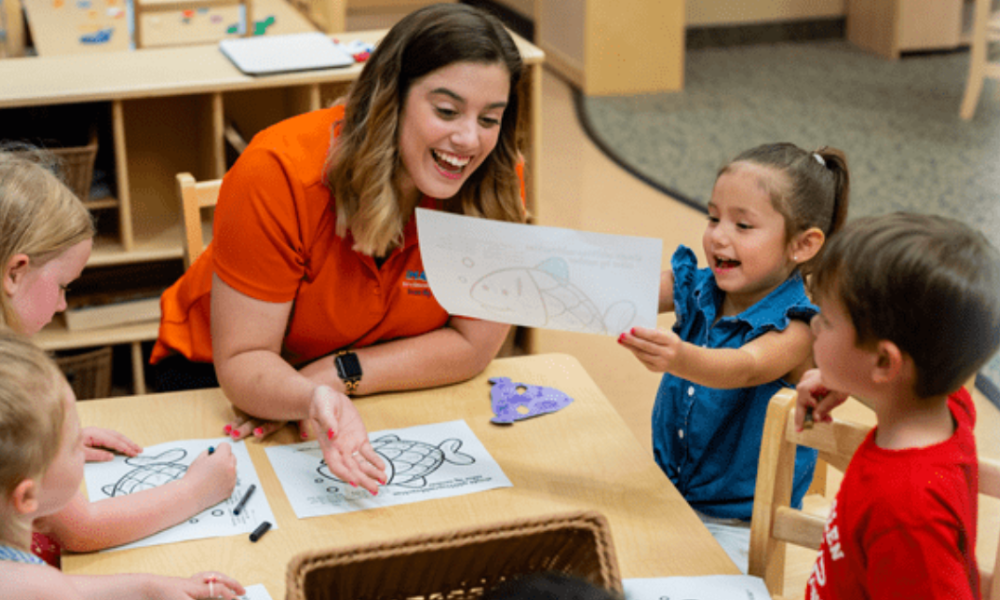
Preschool serves younger children, usually ages 3 to 4, and centers on play-based learning and social skills. Pre-K is for children ages 4 to 5 in the year before kindergarten, with more structured lessons that build academic readiness.
Plenty of families use ‘preschool’ and ‘pre-K’ interchangeably. Both are part of early childhood education, and both help young children get ready for school.
Still, the two programs serve different ages and focus on different goals. Knowing the difference between preschool and pre-K helps you pick the right fit for your child’s age and stage. The ages, the skills, and the timing all set the two programs apart.
What Is the Difference Between Preschool and Pre-K?
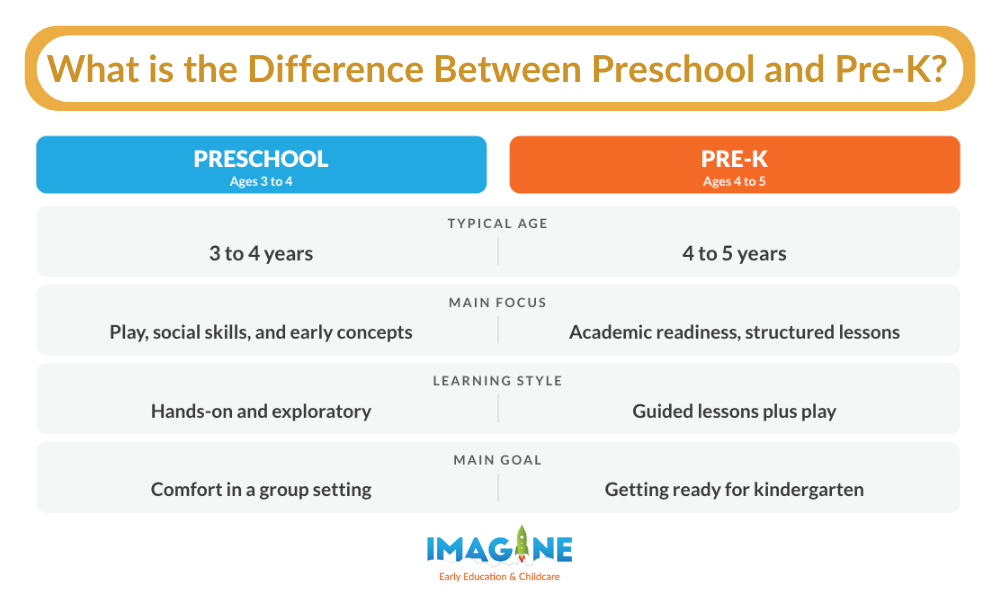
The difference comes down to two things: the child’s age and the focus of the learning. Preschool builds a foundation, and Pre-K sharpens the skills children need right before kindergarten.
At a Glance: Preschool vs Pre-K
| Feature | Preschool | Pre-K |
|---|---|---|
| Typical age | 3 to 4 years | 4 to 5 years |
| Main focus | Play, social skills, early concepts | Academic readiness, structured lessons |
| Learning style | Hands-on and exploratory | Guided lesson plus play |
| Main goal | Comfort in a group setting | Getting ready for kindergarten |
What Is a Preschool Program?
Preschool is often a child’s first classroom experience. A preschool program usually serves children ages 3 to 4. The day centers on play-based learning, hands-on activities, and social interaction. Children learn to share, take turns, and follow simple routines. They also meet early concepts like colors, shapes, letters, and counting in a gentle way. The goal is comfort and curiosity, not formal academics.
What Is a Pre-K Program?
Pre-K, short for pre-kindergarten, is the year before kindergarten. A pre-K program serves children ages 4 to 5. The pre-K classroom adds more structure than the preschool classroom. Children work through a pre-K curriculum that grows early literacy, math skills, and problem-solving. Pre-K teachers still make room for play, yet lessons place a greater emphasis on academic skills. Some families also hear the term “transitional kindergarten,” which acts as a bridge for children who need more time before kindergarten.
What Do Children Learn in Preschool vs Pre-K?
Both programs support school readiness. They simply do it at different levels. Nearly half of all 3- and 4-year-olds were enrolled in preschool or kindergarten programs in 2023, so most children experience some early learning before elementary school.
Preschool Skills: A Strong Foundation
Preschool builds foundational skills through play and group activities. Children develop:
- Social skills: They practice sharing, turn-taking, and making friends.
- Early language: They grow their vocabulary through songs, stories, and conversation.
- Basic concepts: They explore colors, shapes, and counting through hands-on experience.
- Independence: They learn routines like cleaning up and washing hands.
Pre-K Skills: Academic Readiness
Pre-K builds on that base with academic skills and more structure. Children work on:
- Early literacy: They learn letter sounds, name writing, and print awareness.
- Math skills: They count, sort, and spot patterns with hands-on materials.
- Problem solving: They work through challenges and finish longer projects with peers.
- Emotional skills: They manage feelings and cooperate during group activities.
By the 2023-2024 school year, state-funded pre-K reached 37% of 4-year-olds nationwide, a record high. This points to how much families value advanced learning before kindergarten.
Should My Child Attend Preschool, Pre-K, or Both?
The child’s age is the first thing to check, yet readiness matters just as much. Many children attend preschool first, then move into a pre-K class the year before kindergarten. Others start later, based on their birthday and development.
Signs Your Child Is Ready for Preschool
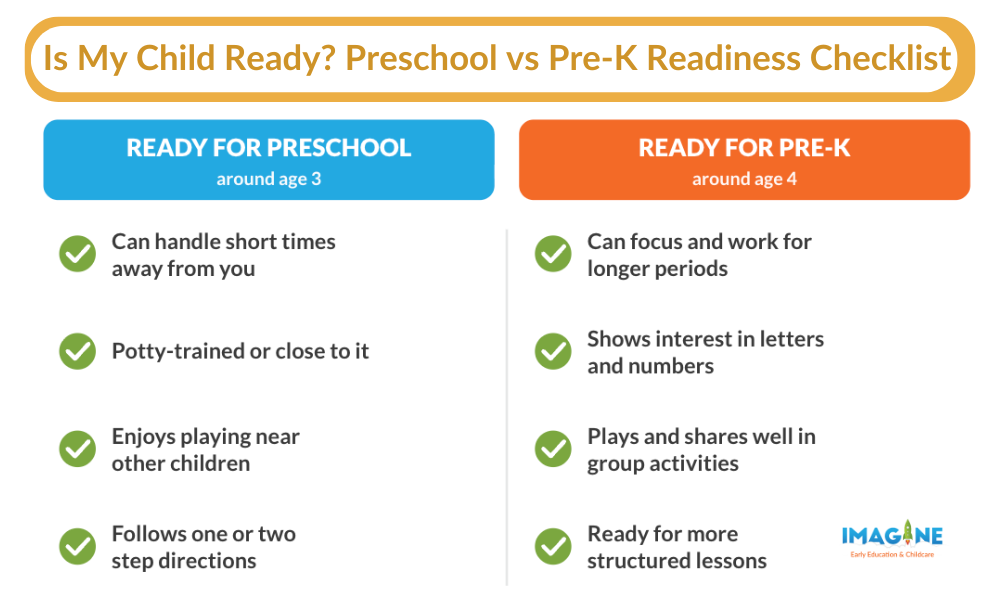
Most children start preschool around age 3. Look for these signs:
- Independence: Your child can handle short times away from you.
- Basic self-care: Your child is potty-trained or close to it.
- Interest in peers: Your young child enjoys playing near other children.
- Simple directions: Your child can follow one- or two-step requests.
Signs Your Child Is Ready for Pre-K
A child is usually ready for pre-K near age 4, in the year before kindergarten. Signs include:
- Longer focus: Your child can sit and work for longer periods.
- Early academics: Your child shows interest in letters and numbers.
- Group cooperation: Your child plays and shares well in group activities.
Check your state’s kindergarten cutoff date, since it often decides pre-K timing.
How Do Preschool and Pre-K Prepare Kids for Kindergarten?
Both programs give children a strong foundation for the kindergarten classroom. Preschool builds the social and emotional base. Pre-K adds the academic readiness that helps children start elementary school with confidence.
The Building Blocks of School Readiness
Kindergarten readiness is more than knowing letters. These school readiness skills blend academic, social, and emotional growth. A high-quality pre-kindergarten program helps children:
- Communicate clearly: They express needs and listen to others.
- Work with peers: They cooperate during group activities and play.
- Think through problems: They try, adjust, and try again to build problem-solving skills.
- Grow early literacy and math: They gain foundational skills for reading and numbers.
By age 5, more than 85% of children are enrolled in school. Early learning gives your child a head start on the routines and social development that kindergarten expects, which supports lifelong learning down the road.
Imagine Early Education & Childcare: Preparing Your Child for Kindergarten and Beyond
What is the main difference between preschool and pre-K?
The main difference is age and focus. Preschool serves children ages 3 to 4 and centers on play-based learning and social skills. Pre-K serves children ages 4 to 5 and adds structured lessons that build academic readiness for kindergarten.
What age should a child start pre-K?
Most children start pre-K around age 4, in the year before kindergarten. The exact timing depends on your child’s birthday and your state’s kindergarten cutoff date. Readiness signs like longer focus and interest in letters also matter.
Is pre-K the same as transitional kindergarten?
No. Transitional kindergarten is a separate bridge program for children who need more time before kindergarten, often based on a fall birthday. Pre-K prepares 4- to 5-year-olds for kindergarten the following year. Names and rules vary by state.
Does my child need both preschool and pre-K?
Not always. Many children attend preschool first, then pre-K the year before kindergarten. Others start later and go straight to pre-K. The right path depends on your child’s age, readiness, and development.
Is preschool or pre-K required before kindergarten?
Neither preschool nor pre-K is required in most states. Both are recommended by many early childhood educators because they build social skills and academic readiness. Children who attend often enter the kindergarten classroom with more confidence.


Leave a Reply
Want to join the discussion?Feel free to contribute!