Educational Art Activities for Preschoolers That Support Development
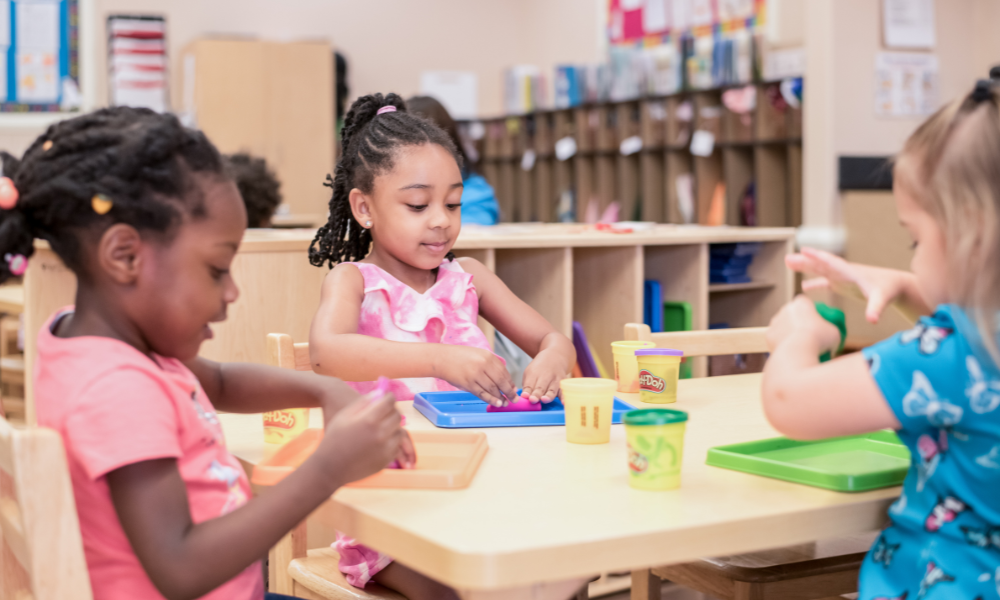
Art activities for preschoolers build fine motor skills, hand-eye coordination, and problem-solving skills through hands-on creative play. The best art projects focus on process art with simple supplies like washable paint, paper plates, and pipe cleaners.
Art activities for preschoolers do more than fill time between snacks and naps. Every brushstroke, glue blob, and squished ball of dough helps young children build motor skills, practice color mixing, and grow their problem-solving skills. Parents and teachers often wonder which preschool art activities actually support development, not just keep little hands busy.
How Do Art Activities Support Preschool Development?
Art does serious developmental work for young children. Research shows that children who participate in arts programming over an extended period develop stronger social skills like sharing and cooperation, while showing reduced shyness, anxiety, and aggressive behavior. Here is what happens when a preschooler picks up a paintbrush or squeezes a glue stick.
Building Fine Motor Skills
Holding paint brushes, squeezing puffy paint bottles, and pinching pom poms strengthen the small muscles in a preschooler’s hands. These same muscles will later grip a pencil for handwriting. Activities like threading pipe cleaners through a paper plate or peeling stickers also build hand-eye coordination.
Growing Critical Thinking
When a child mixes primary colors to make new shades, they conduct their first science experiment. Color mixing teaches cause and effect. Choosing where to place a popsicle stick on a craft project sharpens problem-solving skills and critical thinking.
Supporting Social-Emotional Growth
Art gives toddlers and older preschoolers a way to express feelings they cannot yet name. Painting alongside friends teaches sharing, patience, and conversation. Early childhood development research consistently links creative activities to stronger self-regulation in young children.
What Are the Best Art Activities for Preschoolers?
The best preschool art activities use simple supplies and focus on the experience rather than the final product. Here are ten favorites that work well for ages three to five.
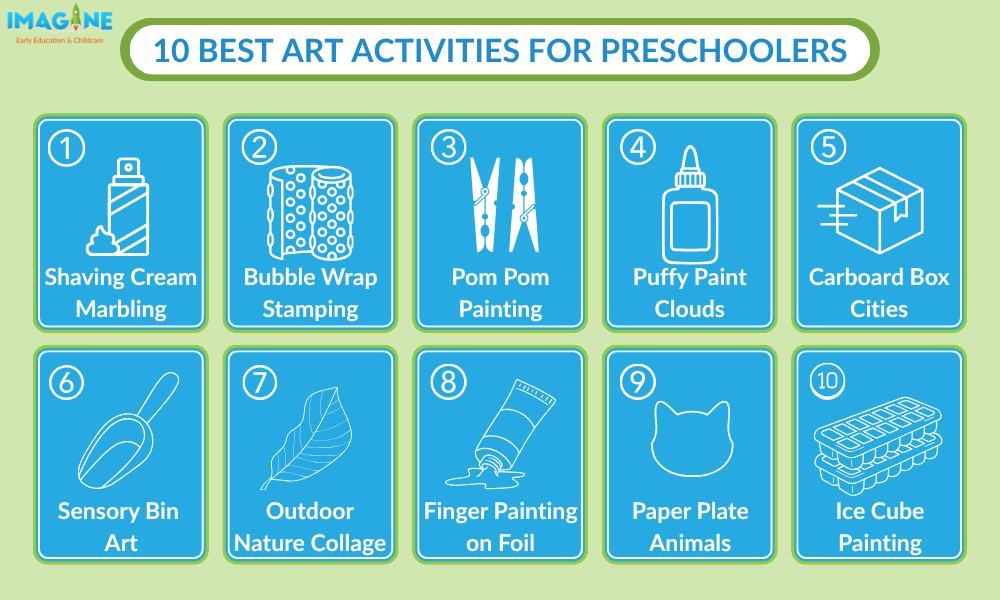
- Shaving Cream Marbling: Spread shaving cream on a tray, add drops of liquid watercolors or food coloring, and swirl with a popsicle stick. Press watercolor paper on top to lift marbled prints. This builds sensory awareness and hand-eye coordination.
- Bubble Wrap Stamping: Tape bubble wrap to a table, paint it with washable paint or tempera paint, then press paper on top. Children love the texture and the surprise pattern that appears.
- Pom Pom Painting: Clip a pom pom in a clothespin and dip it in paint. The pinch grip strengthens fine motor skills while making polka-dot art on paper.
- Puffy Paint Clouds: Mix equal parts shaving cream and washable glue with a drop of food coloring. Spread on cardboard for a 3D cloud painting that dries soft.
- Cardboard Box Cities: Save shipping boxes and let toddlers paint them, then stack them into towers or houses. This combines creative play with spatial reasoning.
- Sensory Bin Art: Fill a sensory bin with dyed rice or pasta and let preschoolers scoop, sort, and arrange. Add small paint brushes to push the materials around.
- Nature Collage: Collect leaves, twigs, and petals on a walk, then glue them to paper with a glue stick. This connects art with the outdoor environment.
- Finger Painting on Foil: Tape aluminum foil to a table and squirt washable paint on top. The slippery surface lets children swirl colors in different ways.
- Paper Plate Animals: Use paper plates as the base for lions, owls, and frogs. Add pipe cleaners, googly eyes, and tempera paint for personality.
- Ice Cube Painting: Freeze liquid watercolors in an ice tray with popsicle sticks for handles. Children paint as the colors melt onto watercolor paper.
What Art Materials Should Every Preschool Art Cart Include?
A well-stocked art cart turns spontaneous moments into learning opportunities. You do not need expensive supplies, just a thoughtful mix of basics.
Paint and Drawing Tools
Stock washable paint, tempera paint, and liquid watercolors in primary colors so children can practice color mixing themselves. Add paint brushes in three or four sizes, plus chunky crayons and washable markers for variety.
Paper and Surfaces
Keep watercolor paper, construction paper, and paper plates on hand at all times. Cardboard boxes from deliveries make excellent free canvases. Different texture surfaces like sandpaper or aluminum foil add variety to art projects.
Building and Sticking Supplies
Pipe cleaners, popsicle sticks, pom poms, and glue sticks cover most preschool crafts. A small bin of buttons, fabric scraps, and recycled materials encourages open-ended creativity for older preschoolers.
Sensory Add-Ins
Shaving cream, food coloring, dry rice, and dried beans turn a sensory bin into an art studio. These low-cost items deliver high-value learning for the money.
Process Art vs. Product Art: Which Builds More Skills?
Process art focuses on the experience of creating. Product art focuses on a specific finished product. Both have value, but process art tends to support stronger early childhood development in most age groups.
What Is Process Art?
In process art, the child controls the materials, colors, and direction. There is no right final product. A preschooler might paint over their picture three times or use only blue. The learning happens during the making.
What Is Product Art?
Product art guides children toward a specific outcome, like a handprint card. These craft projects build following-directions skills and produce keepsakes that families love. They have a place in any preschool curriculum, just not every day.
How to Balance Both
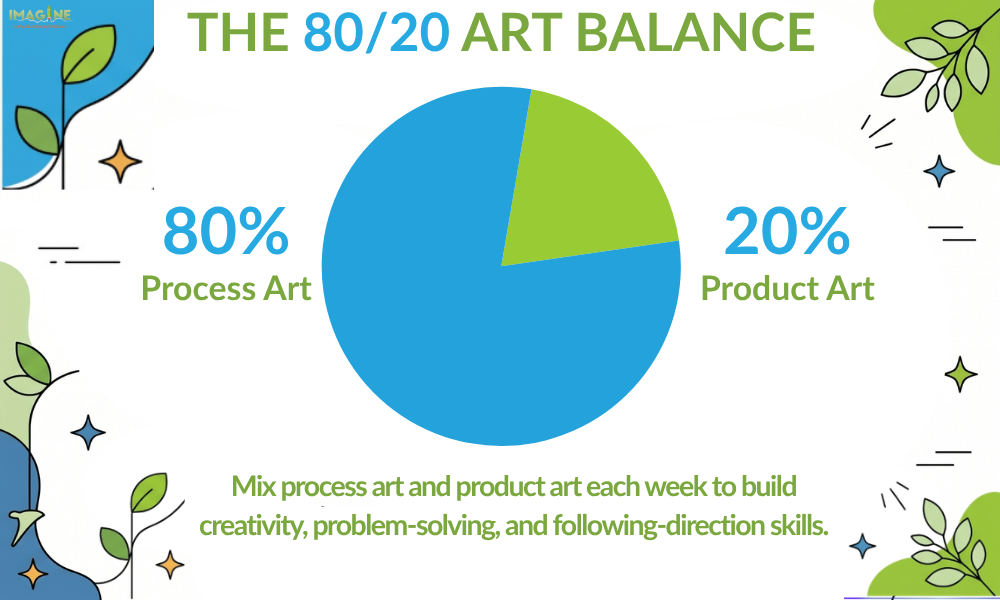
Aim for about 80 percent process art and 20 percent product art each week. Set out materials without a sample to copy. Ask open-ended questions like, “Tell me about your painting,” instead of, “What is it?” This protects creative play while still leaving room for guided craft projects.
Imagine Early Education & Childcare: Your Partner in Creative Learning
At Imagine Early Education & Childcare, art is woven into every preschool day. Our curriculum blends teacher-led lessons with open-ended creative play, so children build motor skills and problem-solving skills while exploring their own ideas. Classrooms come stocked with washable paint, liquid watercolors, sensory bins, and natural materials that invite discovery.
Our educators plan art activities aligned with early learning standards and kindergarten readiness milestones. Families receive updates through the Kindertales app, so you can see what your child created and continue the learning at home.
Ready to see how art and play come together in our classrooms? Schedule a tour at Imagine Childcare & Early Education to meet our team and find a center near you.
What are the best art activities for preschoolers at home?
The best art activities for preschoolers at home use simple supplies like washable paint, paper plates, pipe cleaners, and pom poms. Process art projects like finger painting, shaving cream marbling, and ice cube painting build fine motor skills and creativity without expensive materials. Focus on the experience, not the final product.
How does art help preschoolers develop fine motor skills?
Art activities strengthen the small hand muscles preschoolers need for writing later on. Holding paint brushes, squeezing glue sticks, picking up pom poms, and threading pipe cleaners all build fine motor skills and hand-eye coordination. Regular practice with different materials supports stronger grip and control over time.
What is process art for preschoolers?
Process art is creative play where the child controls the materials and direction, with no specific final product in mind. It supports problem-solving skills, critical thinking, and self-expression. Examples include free painting with liquid watercolors, building with cardboard boxes, and exploring sensory bins.
What art supplies should a preschool art cart include?
A preschool art cart should include washable paint, tempera paint, liquid watercolors, paint brushes in different sizes, watercolor paper, paper plates, pipe cleaners, pom poms, popsicle sticks, glue sticks, and sensory items like shaving cream. These simple supplies cover most preschool art projects.
At what age can preschoolers start doing art activities?
Toddlers can begin simple art activities around 18 months with washable paint and chunky crayons under close supervision. By age three, preschoolers can handle more involved art projects like color mixing, paper plate crafts, and finger painting. Adjust complexity to match each child’s developmental stage.
